The Russian National Corpus is a representative collection of texts in Russian, counting more than 17 bln tokens and completed with linguistic annotation and search tools






Search in corpora
News
Show allThe Russian MultiPARC has been expanded to 482,000 tokens. The update includes Leo Tolstoy’s novella “Family Happiness” in five recorded versions, including professional literary readings and radio and television productions. The corpus also now contains Andrei Platonov’s short story “In a Beautiful and Furious World” in three different recorded versions.
The English-Russian MultiPARC has been expanded to 280,000 tokens. The update includes “Long Day’s Journey into Night” (1941) by Eugene O’Neill, winner of the 1936 Nobel Prize in Literature. The English version is represented by the best-known screen adaptation of the play, directed by Sidney Lumet in 1962. The Russian version, in Vitaly Wulf’s translation, is represented by a 1989 production of the State Academic Maly Theatre of the USSR, directed by Sergei Yashin.
We thank Professor Olga Iriskhanova, Vice-Rector for Research at Moscow State Linguistic University, and the staff of the SKoDis Center for their assistance with the transcription of the English version.
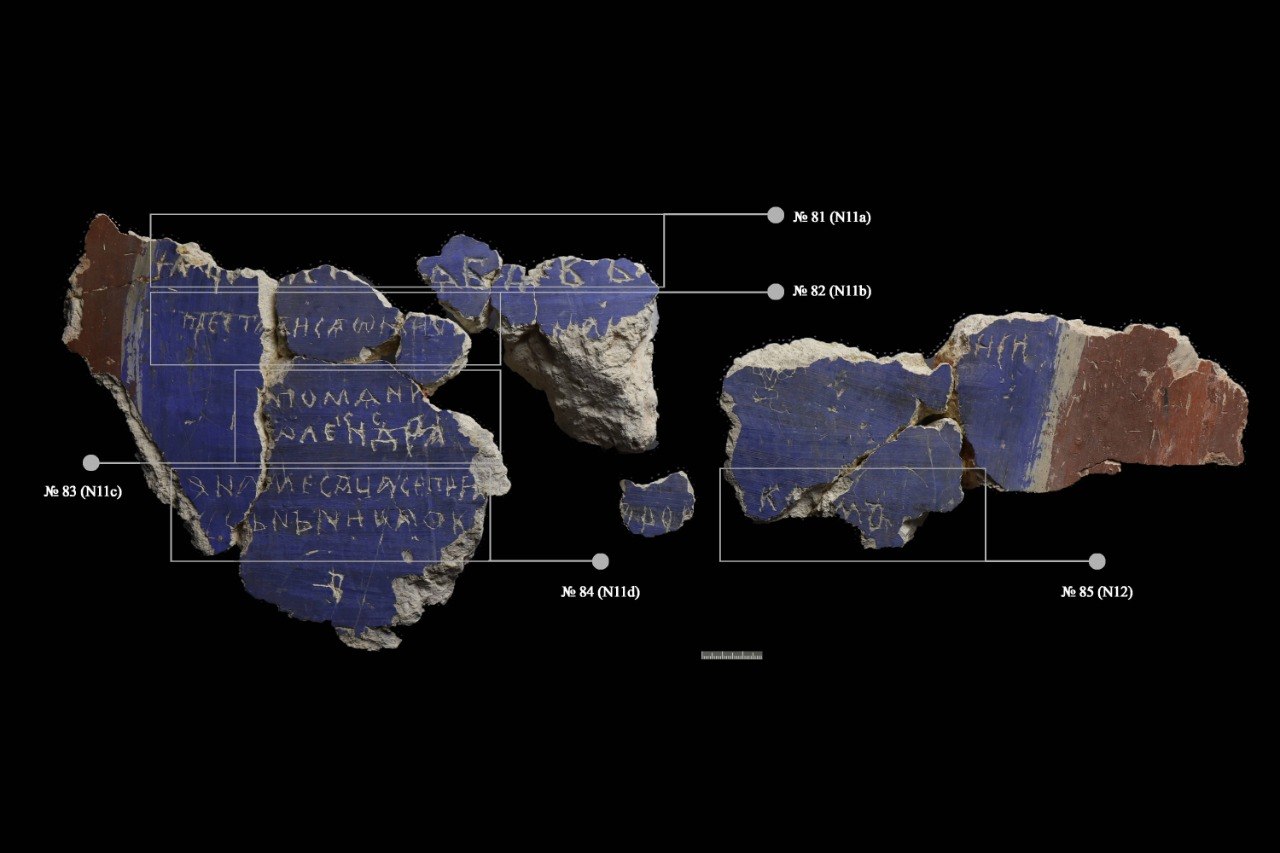
The East Slavic Epigraphy Corpus has been synchronized with the epigraphica.ru database. The update includes 86 new inscriptions totaling 621 tokens, mostly from St. George’s Cathedral at the Yuriev Monastery, as well as from other churches in Novgorod (Nereditsa, Gorodishche) and the St. Sophia Cathedrals in Kyiv and Constantinople. A distinctive feature of the update is the large share of fragmentarily preserved and reconstructed words, amounting to as much as 26%.
Recently, the GICR (VK) corpus was added to the Russian National Corpus. It has expanded the corpus by more than 11 billion word tokens, and it also lets researchers explore regional varieties of Russian. We’ve put together a quiz, “Regional Words in the GICR (VK)”, and invite you to guess what the words mean — then check how they’re actually used in the colloquial language documented in the corpus!